University of Florida researchers are sampling Clearwater's coastal waters to build a warning system for Vibrio vulnificus, the flesh-eating bacteria. One Pinellas County resident has already died from the infection this year.
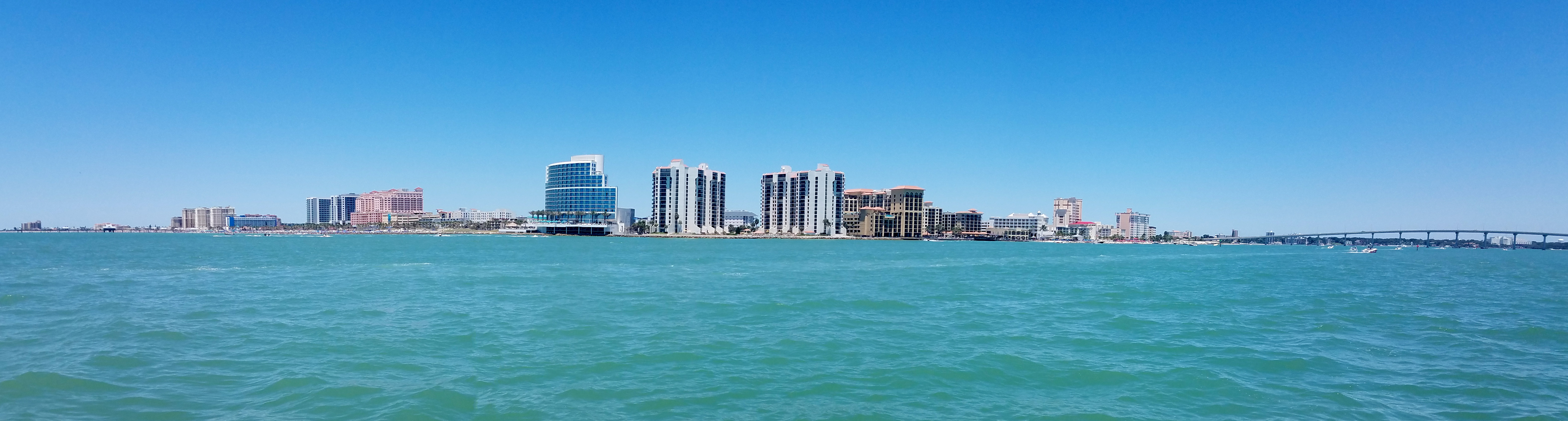
Students from UF's GeoHealth and Hydrology Laboratory collected water samples in Clearwater as part of a project spanning Florida's coastline from the Panhandle to Pinellas County, WTSP first reported Monday, Oct. 19.
"We are taking samples of the water to understand the microbiome of this vicinity," researcher Natalie Larsen told WTSP.
The goal is a public dashboard that would show beachgoers where the bacteria are concentrated before they get in the water. Researcher Summer Schmidt said the team wants to produce maps showing potential hot spots so people can decide whether a stretch of coast is safe.
The project is part of a broader effort called VIGOR, which stands for Vibrio Infection Genomics for Outbreak Risk Forecasting. UF Environmental Engineering Professor Antarpreet Jutla leads the work, a collaboration between UF and the University of Maryland funded by a $3.6 million grant from the National Institutes of Health (NIH), Action News Jax reported in September.
Jutla said VIGOR will use satellite data, including sea surface temperature and nutrient levels, to generate risk scores for specific areas. The system aims to predict hot spots at least two weeks in advance at a resolution of four kilometers.
The researchers estimate a working prototype is two to three years away. Jutla told WTSP in an earlier report that the team needs at least one year of intensive water collection to map the microbiome before identifying hot spots.
Vibrio vulnificus infections are climbing in Florida. WTSP reported the Florida Department of Health (FDOH) has tallied 25 cases and five deaths statewide in 2026. The FDOH's own published data table lists 29 cases and five deaths for the year.
The five deaths already match the state's total for all of 2025.
One of those deaths occurred in Pinellas County. That was the county's first confirmed Vibrio case of 2026, according to FDOH data. In 2024, Pinellas saw 15 cases and three deaths, an increase the state attributed to Hurricane Helene.
People can contract Vibrio vulnificus by eating raw shellfish or by entering the water with an open wound, according to the FDOH. Bloodstream infections are fatal about 50% of the time, the department says. About one in five people with the infection die, and many require intensive care or limb amputations.
A gap in state tracking complicates the picture. WTSP reported the FDOH does not disclose whether cases stem from open wounds or raw shellfish. Cases are tracked by where a patient was diagnosed, not where they were infected.
The VIGOR dashboard would fill part of that gap by giving beachgoers real-time data on bacteria levels at specific locations along the coast. Sampling sites already stretch across Florida's Gulf shoreline, including Clearwater.
The FDOH advises residents with open wounds or compromised immune systems to avoid warm saltwater and raw shellfish.