Clearwater Fire & Rescue reminds residents that readiness extends well beyond hurricane season. The timing is deliberate: peak season hits next month, and local officials want families checking their plans now, not after a storm enters the Gulf.
A historically quiet hurricane season, on paper
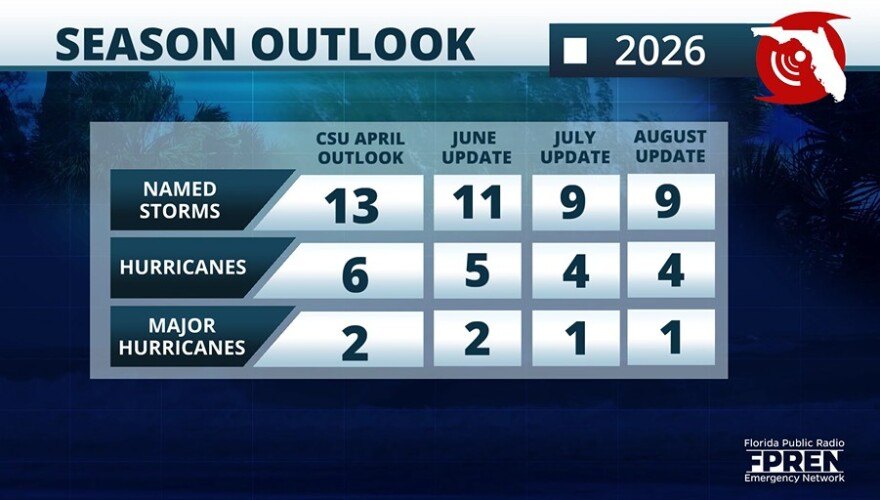
That message carries extra weight this year because forecasters expect remarkably little activity. Colorado State University (CSU) released its August hurricane season outlook on Aug. 5, calling for just nine named storms, four hurricanes and one major hurricane in the Atlantic basin, WMNF reported. It ranks as one of the least active predictions since CSU began issuing forecasts in 1984 and would be the second-lowest August outlook the university has ever issued for total named storms.
An average Atlantic season produces 14 named storms, seven hurricanes and three major hurricanes.
The culprit behind the quiet outlook: a strengthening El Niño that promotes drier air and stronger upper-level winds hostile to tropical cyclone development. CSU said those conditions should persist through much of August and September. So far the season backs that up. Tropical Storm Arthur lasted less than a full day, and Tropical Storm Bertha struggled to organize before making landfall in Louisiana on July 22. Through early August, the Atlantic's accumulated cyclone energy stood at just 2.6 units, more than 70% below the long-term average.
One storm can change everything: Pinellas runs a hurricane drill
Pinellas County isn't relaxing. Emergency Management Director Cathie Perkins oversaw a five-day hurricane exercise July 5-9 that simulated a Category 3 storm hitting the county with 120-mph winds and 10- to 15-foot storm surge. About 400 representatives from local, state and federal agencies participated at the Emergency Operations Center in Largo.
"Exercises like this allow us to strengthen that coordination and fine-tune our emergency procedures so we can be prepared," Perkins said in a county press release about the drill.
The stakes are fresh in memory. When Hurricane Helene struck Pinellas County in fall 2024, 12 people died, most from floodwater after they failed to leave evacuation zones. The Pinellas County Sheriff's Office responded by creating a new Emergency Management Division, according to the sheriff's office.
What to do before peak season hits
The National Oceanic and Atmospheric Administration (NOAA) says more than 85% of Atlantic tropical cyclones develop from August through October, with activity typically peaking around Sept. 10. The season runs through Nov. 30.
Pinellas County's 2026 Hurricane Guide lists evacuation zones A through E, with Zone A facing storm surge risk of up to 7 feet. Residents can look up their zone at kyz.pinellas.gov, sign up for Alert Pinellas notifications, download the Ready Pinellas app or call Pinellas County Emergency Management at 727-464-3800.
Key dates and resources:
- Hurricane season peak: Sept. 10
- Season ends: Nov. 30
- Zone lookup: kyz.pinellas.gov
- Preparedness info: disaster.pinellas.gov and the Ready Pinellas app




.jpg)